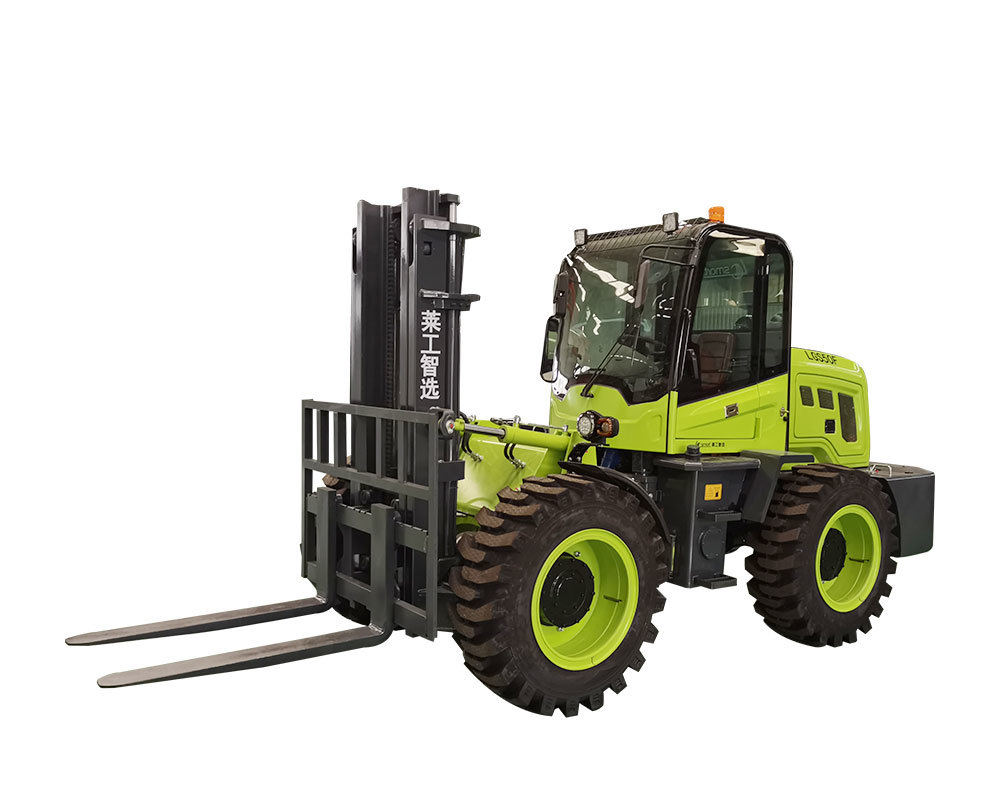
There are four forklift families on this site and they are not variations on one machine. Picking the wrong family is the most common and most expensive mistake in a forklift enquiry, and it almost always comes down to the ground the truck has to work on.
Paved yard, outdoors: diesel counterbalance
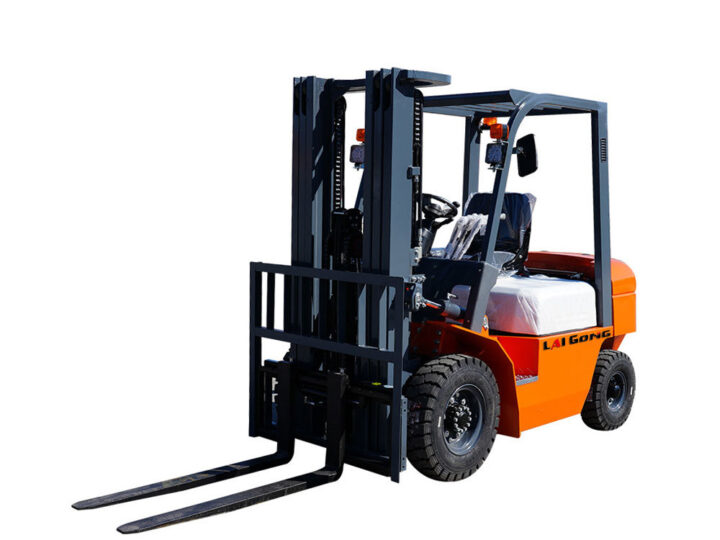
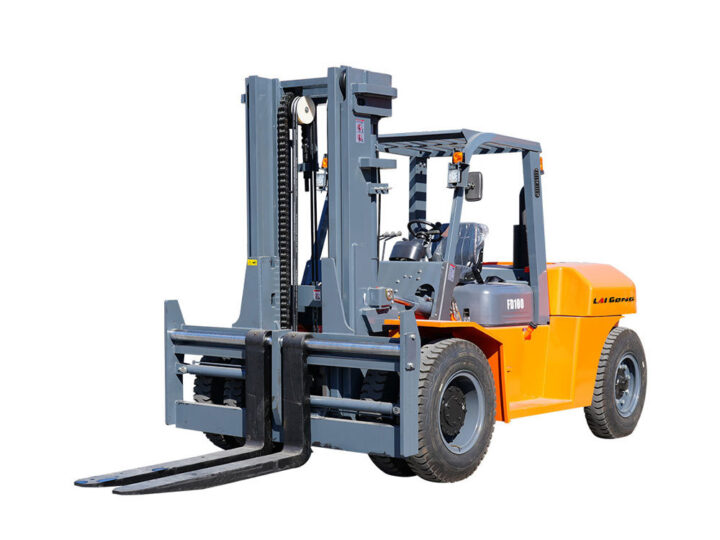
The diesel balance forklifts run from the CPCD25 up to the CPCD100. This is the standard workhorse for a hard, level surface: loading and unloading lorries, moving stock around a paved yard, timber and steel handling. The range goes high enough at the top end to cover heavy single loads that the compact families cannot approach.
They need a reasonable surface. On mud, hardcore or a half-finished site, small solid or pneumatic tyres and low ground clearance will stop the truck long before the load does.
Indoors: electric counterbalance
The electric counterbalanced trucks — CPD16, CPD20 and CPD35 — do the same job without an exhaust and with much less noise. Inside a warehouse, a food or pharmaceutical building, or anywhere with people working close by all shift, that is not a preference but a requirement.
As with the electric loaders, the planning question is charging: how many hours a shift needs and what electrical supply the building actually has. Settle that before choosing the truck.
Rough ground: articulated rough-terrain
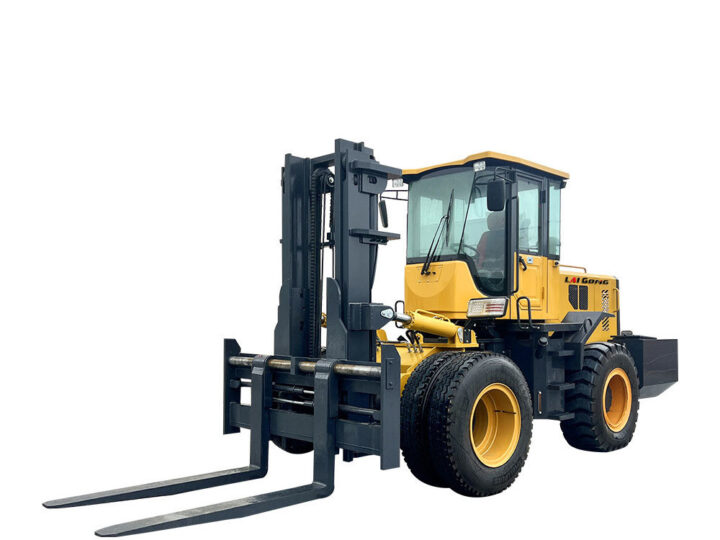
Two families cover ground a counterbalance truck cannot use, and the difference between them is where the chassis joint sits: front articulated (LG35F, LG50F, LG70F, LG100F) and rear articulated (LG35R, LG50R, LG60R).
Both are built for building sites, unmade yards, farms and quarry ground, and both steer by bending the chassis, which gives a much tighter turn than a rigid truck of the same capacity — the reason they suit confined sites. Where the joint sits changes how the truck behaves as it turns with a load up, so the sensible approach is to tell us the site and the load rather than choose the layout from the name. Send us the ground conditions, the heaviest load, the height it has to reach and the tightest space it has to turn in, and we will say which of the two fits.
A quick filter
- Indoors or near people all shift? Electric counterbalance.
- Paved outdoor yard, heavy loads? Diesel counterbalance.
- Unmade ground, building site, farm? One of the two articulated rough-terrain families.
- Long reach or loading over an obstacle? Look at the telescopic boom loaders instead of a forklift.
Capacity ratings are quoted at a reference load centre, and a load that is bulky or badly balanced derates the truck. If your load is awkward, tell us its dimensions as well as its weight. Send us the details and we will match the family first, then the model.