Electric mini excavators are showing up in more conversations with contractors, farmers and equipment dealers. That does not mean diesel machines are suddenly obsolete. It means buyers now have another option for jobs where a small machine, low noise and no tailpipe exhaust can matter as much as raw power.
The useful question is not, “Is electric better than diesel?” It is, “Does electric fit this job?”That distinction matters. A machine working eight hours on a remote site has very different needs from a machine doing short trenching jobs around a farm, greenhouse, residential property or landscaping project. If you start with the job instead of the power source, the choice becomes much clearer.
Why electric mini excavators are getting more attention
Mini excavators spend a lot of time in places where larger construction machines are awkward: narrow yards, orchards, gardens, barns, utility trenches and small renovation sites. In these environments, the machine is often close to people, animals or buildings.
That is where an electric machine can make practical sense. During operation there is no diesel exhaust from the machine, noise is generally lower, and there is no need to keep a small diesel engine idling between short tasks. For customers working in controlled sites with access to electricity, those differences can be useful rather than cosmetic.
There is another reason: compact equipment is often used intermittently. A landscaper may dig a trench, stop to set pipe, move soil, then start again. A farm may use the excavator for drainage in the morning and fence work later in the day. This kind of stop-and-start duty cycle is worth considering when comparing power systems.
Where an electric mini excavator can be a good fit
1. Farms and orchards
On a farm, a mini excavator is rarely doing only one job. It may open a drainage ditch, prepare an irrigation line, clean around a building, dig for fence posts or help with small maintenance work. Compact size matters because access is often limited by trees, sheds, gates and existing infrastructure.
An electric mini excavator can be especially interesting when these jobs are close to livestock areas, farm buildings or other places where operators want less local exhaust and less noise.
2. Landscaping and property maintenance
Landscaping contractors often work close to homes, hotels, schools, parks and commercial properties. The job may only need a small trench, a planting hole, ground preparation or drainage work, but the site still has people nearby.
For this kind of work, a compact electric excavator can be easier to live with. The point is not that it is silent or that it has no environmental impact at all. The practical benefit is that it can reduce the engine noise and tailpipe exhaust that normally come with a small diesel excavator.
3. Residential and urban jobs
Small renovation and utility jobs are another natural use case. Space is limited, working hours may be restricted, and neighbors are close. A machine under one meter wide can also reach areas where a larger excavator simply cannot go.
For buyers who regularly work in these conditions, overall width, turning radius and transport weight may matter more than a headline horsepower number.
4. Greenhouses, barns and semi-enclosed areas
This is one of the clearest situations to evaluate electric power. Ventilation and local exhaust become more important when machinery works under a roof or close to enclosed agricultural buildings. The machine still needs proper site planning and safe operating procedures, but removing diesel tailpipe exhaust from the excavator itself can be a real advantage.
5. Rental fleets and short-duration jobs
Rental companies do not need every machine in the yard to be electric. But a compact electric excavator can open up a different group of jobs: noise-sensitive sites, indoor-adjacent work and customers who specifically ask for battery-powered equipment.
For a dealer or rental company, that can be more useful than treating electric as a replacement for every diesel model.

What should you check before buying one?
Electric does not remove the need to compare specifications. In some ways, it makes the buying checklist more important. Before choosing a battery-powered mini excavator, ask five basic questions.
How long will the machine actually work between charging opportunities?
Do not look only at the battery label. Think about the real duty cycle: continuous digging, intermittent maintenance, travel time and planned breaks. If the supplier does not publish a verified working-time figure, ask for test data for a duty cycle close to yours.
Is charging available where the machine will work?
A battery machine is a poor fit if the job is remote and there is no practical charging plan. On a fixed farm, workshop, rental yard or urban project, charging can be much easier to organize.
Is the machine small enough for the site?
Check overall width, height, turning radius and transport weight. Compact excavators are often purchased because access is the problem, not because the customer wants the smallest machine possible.
Can it still do the digging job?
Check bucket capacity, digging depth, digging radius, excavation force and hydraulic performance. A battery-powered excavator still has to be an excavator first.
What battery and transport documentation is provided?
For international buyers, battery chemistry and transport compliance matter. Ask the supplier for the applicable battery documents before shipment planning begins.
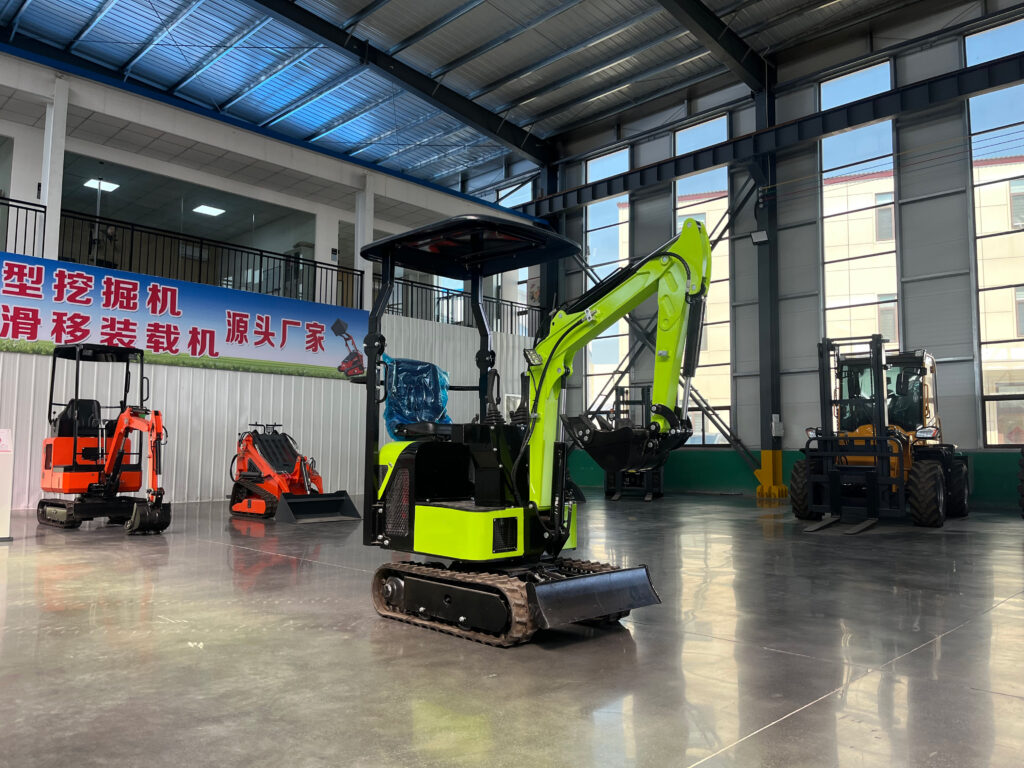
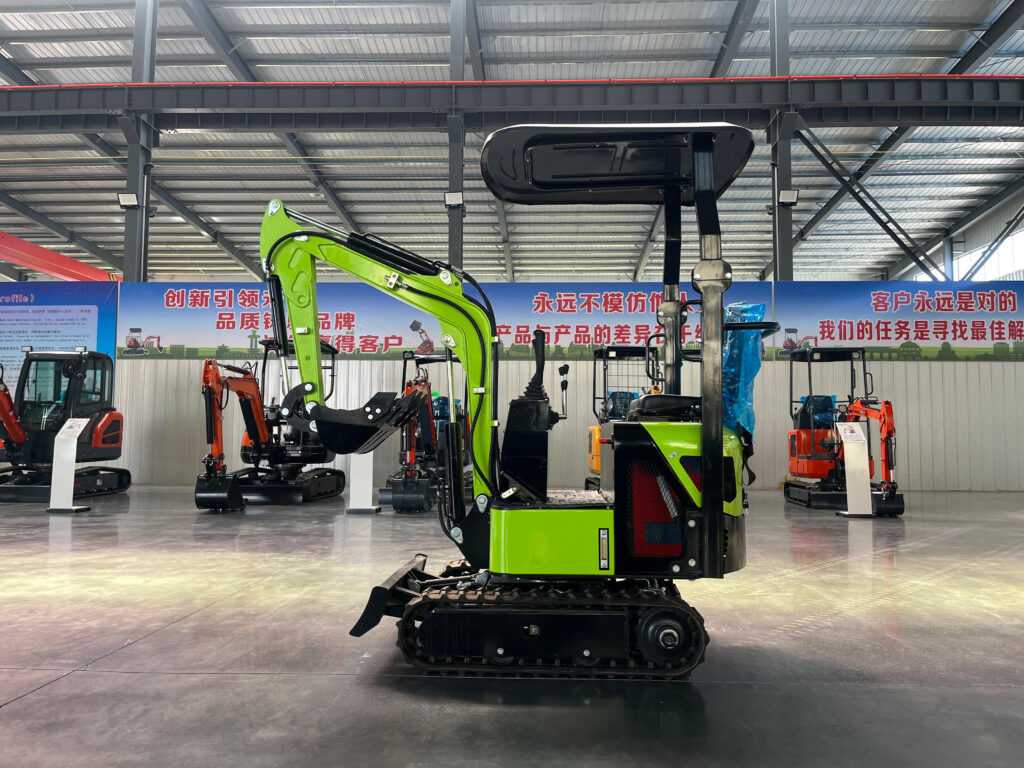
LGCM LG12EV: a 1.2-ton electric mini excavator
The LGCM LG12EV is built for customers who need a compact crawler excavator with electric power. It has an operating weight of 1,200 kg, an overall width of 980 mm and a maximum digging depth of 1,680 mm. Those numbers place it in a size range that is easy to understand: this is a small machine for access-limited work, not a replacement for a large production excavator.
The machine uses a 73.6 V / 202 Ah lithium iron phosphate (LiFePO4) battery system. The supplied product documentation states that the battery has passed UN38.3 requirements for transport. The hydraulic system uses a load-sensing multi-way valve, and the machine is equipped with a variable displacement piston pump.
The LG12EV is rated at 5 kW at 2,000 rpm, with a listed maximum excavation force of 10 kN. The maximum digging radius is 3,070 mm, while the maximum digging height is 2,700 mm. For narrow sites, the 980 mm overall width is one of the specifications worth paying attention to.
| LG12EV specification | Value |
| Operating weight | 1,200 kg |
| Bucket capacity | 0.025 m³ |
| Rated power | 5 kW / 2,000 rpm |
| Power system | 73.6 V / 202 Ah LiFePO4 |
| Overall width | 980 mm |
| Overall height | 2,330 mm |
| Maximum digging depth | 1,680 mm |
| Maximum digging radius | 3,070 mm |
| Maximum digging height | 2,700 mm |
| Maximum unloading height | 1,760 mm |
| Driving speed | 2.3 km/h |
| Swing speed | 11 r/min |
| Gradeability | 30° |
| Maximum excavation force | 10 kN |
| Hydraulic pressure | 18 MPa |
| Main pump rated flow | 21.6 L/min |
Where the LG12EV is most likely to make sense
Based on its size and working range, the LG12EV is a practical machine to evaluate for farm maintenance, orchards, landscaping, residential work and other small excavation jobs where access, local exhaust and noise are important considerations.
It is not the right answer for every site. If the machine must work long shifts far from reliable electricity, a diesel mini excavator may still be the simpler choice. That is not a weakness in the electric concept; it is simply part of matching the machine to the job.
For dealers, the same logic applies. An electric mini excavator does not have to replace the best-selling diesel model in your lineup. It can fill a different slot and serve customers whose work environment makes electric power useful.
A simple buying rule
If the site is remote, the work is continuous and charging is difficult, start by looking at diesel.
If the site is fixed, access is tight, the work is intermittent, and noise or local exhaust is a concern, an electric mini excavator deserves a serious look.
The power source is only one part of the decision. Digging performance, hydraulic control, transport size, parts support and service still matter just as much.
Frequently Asked Questions
Is the LGCM LG12EV a lithium battery excavator?
Yes. The supplied LG12EV specification lists a lithium iron phosphate (LiFePO4) battery system rated at 73.6 V / 202 Ah.
How much does the LG12EV weigh?
The listed operating weight is 1,200 kg.
How deep can the LG12EV dig?
The listed maximum digging depth is 1,680 mm.
How wide is the LG12EV?
The listed overall width is 980 mm.
Does the LG12EV have UN38.3 battery documentation?
The product information supplied by LGCM states that the lithium iron phosphate battery has passed UN38.3 transport requirements.
How long can the LG12EV work on one charge?
Working time is not listed in the current specification sheet used for this article. Ask LGCM for duty-cycle test information based on your application and charging conditions.
Does LGCM offer any other electric equipment?
Yes! LGCM also offers electric loaders and material-handling equipment.
Need to check whether the LG12EV fits your job? Send LGCM your working conditions, required digging depth, daily work pattern and destination market. The team can help you compare the machine with a diesel alternative before you make a decision.